As AI demand accelerates, many cloud providers face a fundamental question: how do we actually make money on AI infrastructure?
The default answer is GPU hours: sell accelerator access, price by time or capacity, and let customers manage the rest. It’s simple to launch, but it quickly runs into margin pressure, price comparison, and low customer stickiness.
Bare metal GPUs are not a business model. They’re a starting point. Providers that stop at raw infrastructure often end up competing on price, squeezed between hyperscalers and increasingly capable enterprise buyers.
The providers that win take a different approach: they move up the value stack and rethink how AI infrastructure is packaged, consumed, and monetized.
Why GPU as a Service Alone Does Not Scale Profitably
Selling raw GPU access feels like the fastest way to enter the AI market. Demand is strong, capacity is scarce, and customers want alternatives to hyperscalers.
But GPU-only economics are unforgiving.
- GPUs are expensive to acquire and operate
- Hardware depreciates quickly
- Margins depend heavily on utilization
- Idle capacity erodes profitability
At the same time, GPU infrastructure is rapidly commoditizing. Hyperscalers push prices down, and regional providers are forced to discount to compete.
Without additional value layered on top, GPU-as-a-Service becomes a race to the bottom. Differentiation fades, churn increases, and long-term margins become difficult to defend.
How Successful Providers Move Up the Value Stack
Durable AI businesses don’t sell GPUs. They sell capabilities.
Instead of treating infrastructure as the product, they treat it as the foundation for higher-value services. The progression typically looks like this:
1. Infrastructure Layer
Bare metal and virtualized compute for customers who need dedicated performance and control.
2. Platform Layer
A standardized platform that abstracts complexity and makes infrastructure easier to consume.
3. Managed AI Services
Training environments, inference platforms, and production-ready pipelines.
4. Solution Layer
Packaged AI applications or industry-specific offerings.
This shift also strengthens customer relationships. Instead of transactional usage, providers build long-term engagement around platforms and services that are harder to replace.
The Role of SKUs, Catalogs, and Packaging
Monetization is not just about pricing. It’s about how offerings are defined and presented.
Raw infrastructure is difficult for buyers to evaluate. GPU models, memory configurations, interconnects, and scheduling policies may matter to engineers, but they create friction for developers and business stakeholders.
Successful providers translate that complexity into clear SKUs and service catalogs. They package infrastructure into offerings that are easy to buy, compare, and consume.
Examples include:
- Predefined training environments
- Inference tiers with predictable performance
- Bundled services that include compute, orchestration, monitoring, and networking
When customers understand what they are buying and what outcome it delivers, pricing becomes easier to justify and revenue becomes more predictable.
Why Developers Do Not Want GPUs
Most developers don’t wake up wanting a GPU. They want to train a model, deploy an API, or run experiments without friction.
Raw GPU access shifts too much responsibility to the customer. Developers must configure environments, manage dependencies, optimize utilization, and troubleshoot failures. This slows adoption and limits the perceived value of the service.
Providers that focus on outcomes remove that burden. They offer notebooks, APIs, managed pipelines, and ready-to-use environments that abstract infrastructure complexity. GPUs become an implementation detail, not the product.
This shift benefits both sides. Developers move faster and focus on building. Providers capture more value by delivering a complete experience rather than a commodity resource.
What AI Infrastructure Monetization Looks Like in Practice
Moving up the value stack enables more flexible and defensible revenue models.
Most successful providers combine usage-based pricing with platform-level services. For example:
- Training environments billed by resource consumption
- Inference priced per request, per token, or by throughput
- Premium tiers that include performance guarantees, compliance features, or enterprise support
These layered offerings increase revenue per customer while reducing direct exposure to hardware margins.
In enterprise environments, internal chargeback or showback models align AI usage with cost accountability. This improves governance and supports continued investment in AI platforms.
Across all models, one principle remains consistent: monetization works best when consumption is measurable, governed, and easy to understand.
The Hidden Prerequisites for Monetization
AI infrastructure cannot be monetized effectively without the right foundation. Metering, governance, and multi-tenancy are not optional features. They are prerequisites.
- Without accurate usage data, pricing models break down.
- Without governance, costs spiral and risk increases.
- Without multi-tenancy, providers cannot efficiently serve multiple teams or customers on shared infrastructure.
Monetization requires infrastructure to be consumable, measurable, and controlled.
This is where platforms like Rafay fit into the picture.
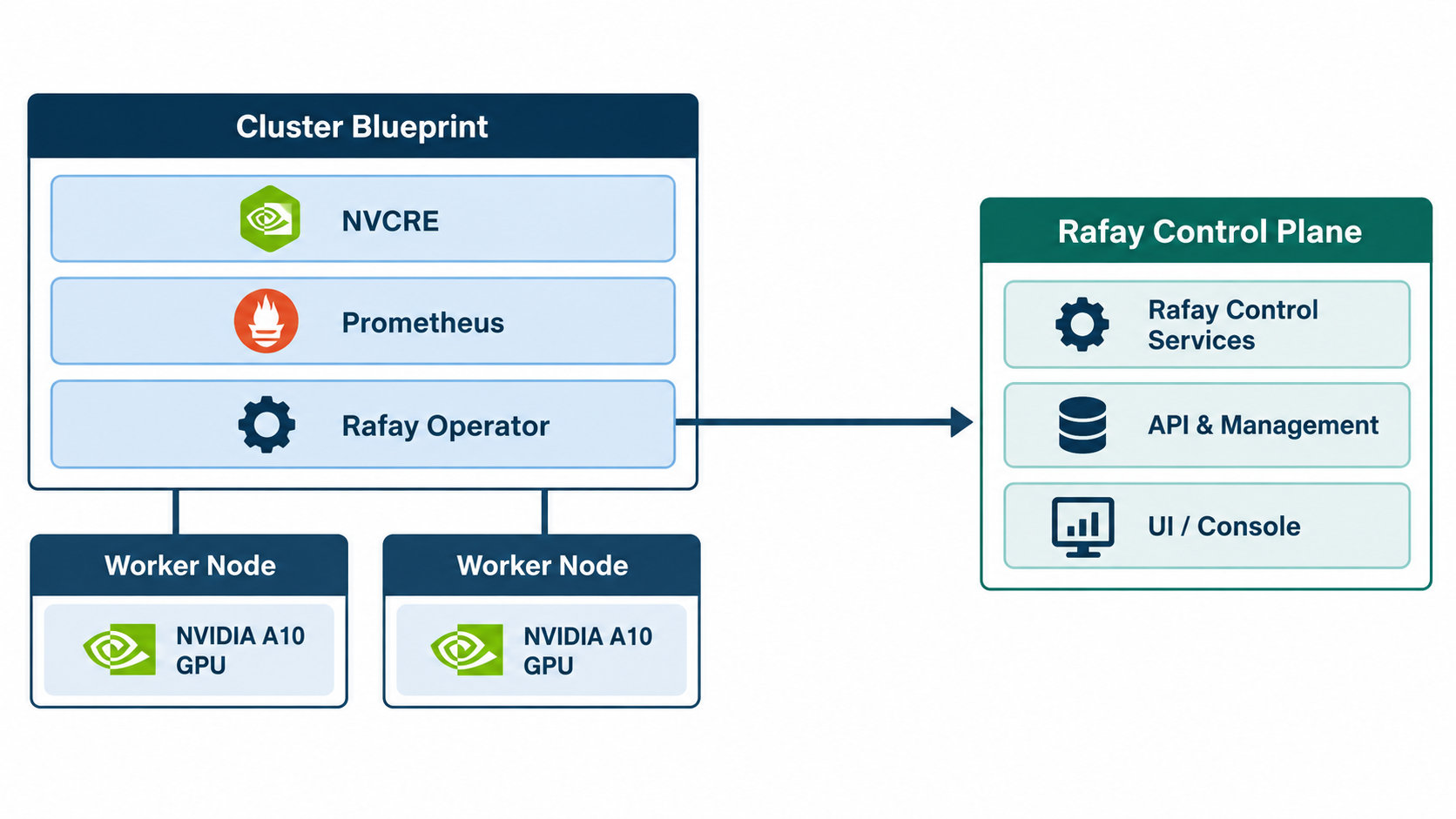
Rather than focusing only on provisioning hardware, Rafay enables CSP-grade consumption, policy-driven governance, and fine-grained visibility across AI workloads. This foundation makes it possible to package, price, and scale AI services sustainably.
For providers building GPU-based offerings, including models such as Bare Metal GPUs as a Service (BMaaS), this governance and consumption layer is what transforms raw infrastructure into a monetizable platform.
The platform does not define the business model, but it enables it. Without this layer, providers are left selling raw capacity and hoping utilization remains high enough to protect margins.
A Better Way to Think About AI Infrastructure Revenue
The providers winning in AI infrastructure are not those with the cheapest GPUs. They are the ones who make AI easy to buy, easy to use, and easy to scale.
Bare metal will always matter. But it is not where value is captured. Value is created through platforms, services, and experiences that solve real customer problems.
For cloud providers, telcos, and enterprises implementing internal chargeback models, the lesson is clear: monetization is not just a pricing decision. It is a product strategy.
Those who rethink AI infrastructure as a consumable platform, rather than a collection of machines, are the ones building sustainable businesses on top of it.
Frequently Asked Questions
What is a GPU cloud business model?
A GPU cloud business model defines how a provider packages, prices, and monetizes access to GPU-based infrastructure. Mature models go beyond selling raw GPU hours and include platforms, managed services, inference pricing, and outcome-oriented offerings.
Why is selling raw GPU hours not profitable long term?
Selling raw GPU hours is highly commoditized and margin-constrained. Pricing pressure from hyperscalers, volatile utilization, and high capital costs make it difficult to sustain profitability without layering additional value and services on top of the infrastructure.
How do cloud providers monetize GPUs more effectively?
Successful providers monetize GPUs by moving up the value stack. This includes offering managed platforms, packaged AI environments, inference services, and premium capabilities such as performance guarantees, governance, and enterprise support.
What does it mean to move up the AI infrastructure value stack?
Moving up the value stack means shifting from selling hardware access to delivering higher-level services. Instead of GPUs, providers offer platforms, APIs, notebooks, pipelines, and ready-to-use AI environments that solve specific customer problems.
Why do developers prefer outcomes over GPU access?
Developers want to train models, deploy inference, and run experiments quickly. Raw GPU access requires them to manage environments, dependencies, and optimization. Outcome-focused services reduce friction and allow developers to focus on building rather than operating infrastructure.
What role do SKUs and catalogs play in AI monetization?
SKUs and service catalogs translate complex infrastructure into clear, consumable offerings. They make AI services easier to buy, compare, and price, which improves customer adoption and supports more predictable revenue models.
How is AI inference typically monetized?
Inference is often monetized through usage-based pricing models such as per-request, per-token, or throughput-based pricing. These models align cost with value delivered and are easier for customers to understand than raw infrastructure billing.
What is internal chargeback for AI infrastructure?
Internal chargeback assigns costs for AI infrastructure usage back to teams or business units. It helps enterprises improve accountability, manage spend, and justify continued investment in AI platforms by tying consumption to outcomes.
Why are governance and metering critical for AI infrastructure monetization?
Accurate metering enables reliable pricing. Governance ensures resources are used efficiently and securely. Without both, providers cannot enforce pricing models, control costs, or scale AI services across multiple customers or teams.