Scale Self-Service Compute Consumption with Confidence
Multi-tenancy controls, enterprise-grade governance, and compliance aren’t features, they’re foundations. The Rafay Platform ensures organizations (from Sovereign Clouds to enterprises) can operate infrastructure that power secure, compliant, and scalable AI and cloud native applications.
.webp)
Unlock the Power of Self-Service Computing
The Rafay Platform allows developers to quickly provision compliant environments using standardized Infrastructure as Code (IaC) templates. This replaces ticket queues and eliminates the need for custom-built environments, ensuring consistency across teams.
Developer Hub for Instant Access
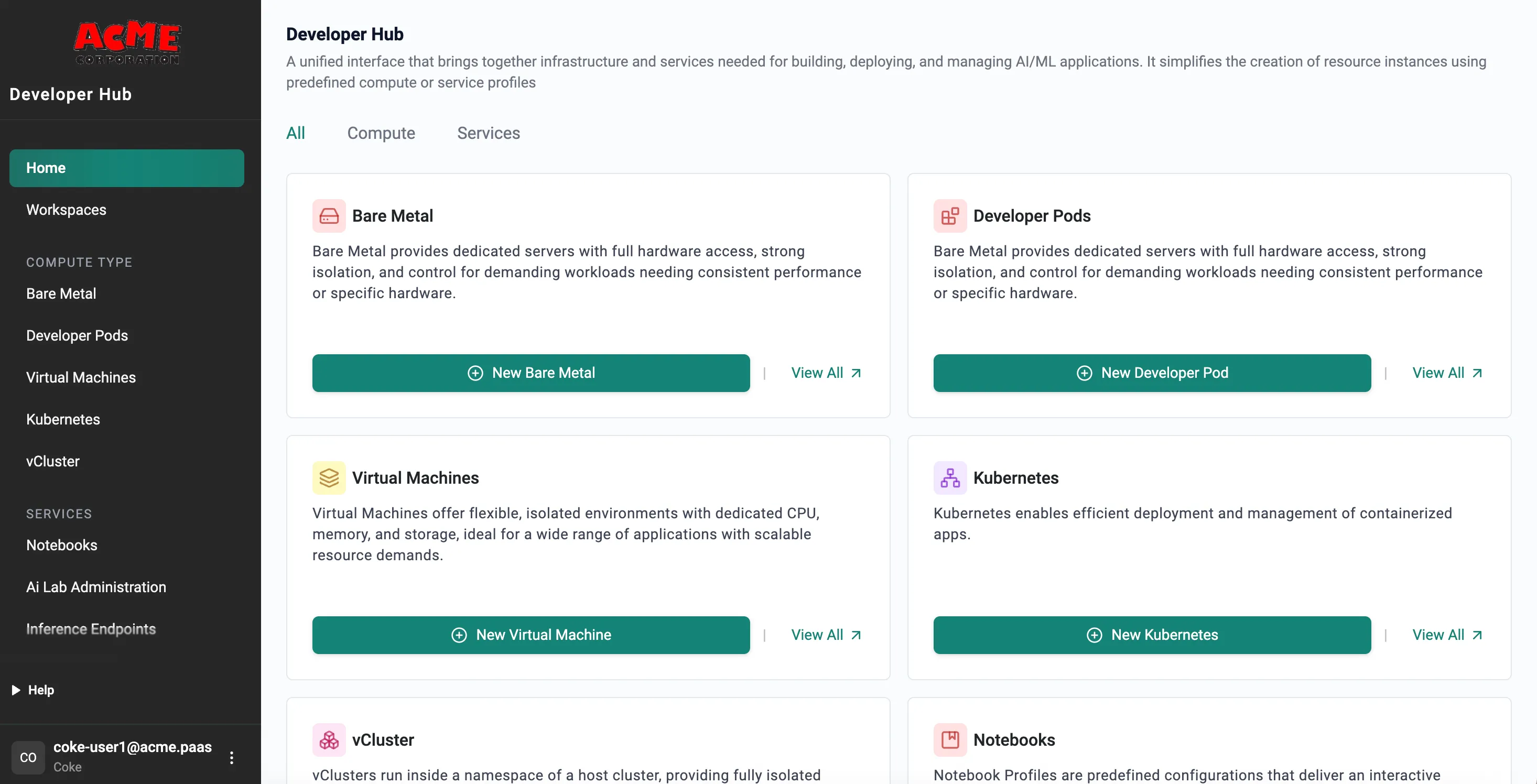
Provide developers and data scientists with instant, self-service access to Kubernetes clusters, GPU workspaces, and AI tools like Jupyter, Kubeflow, and Ray through a unified portal or API. With built-in RBAC and multi-tenancy, teams can move fast while staying within enterprise guardrails.
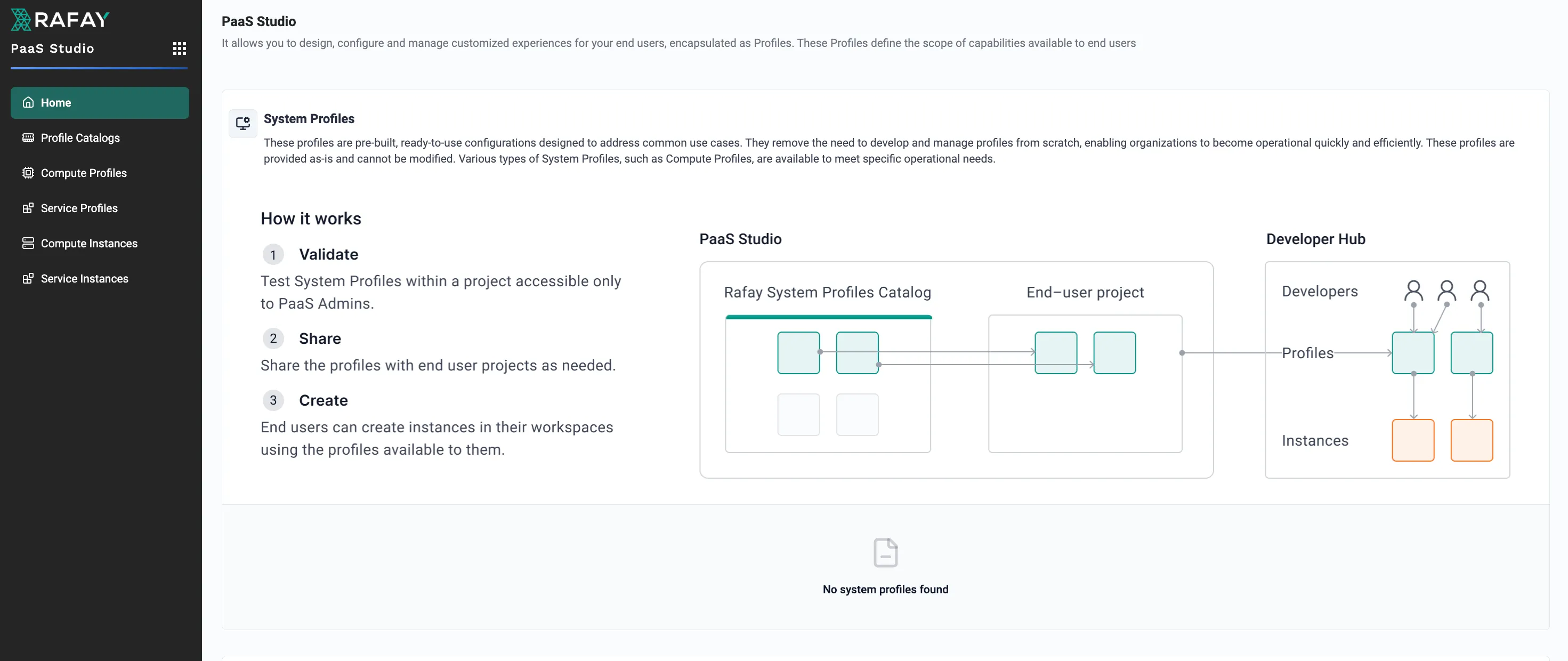
PaaS Studio for Standardized Service Templates
Visually design and publish reusable templates for infrastructure and applications from SLURM clusters to GenAI pipelines. These templates abstract away complexity and enforce policy-driven defaults, enabling repeatable and reliable deployments.
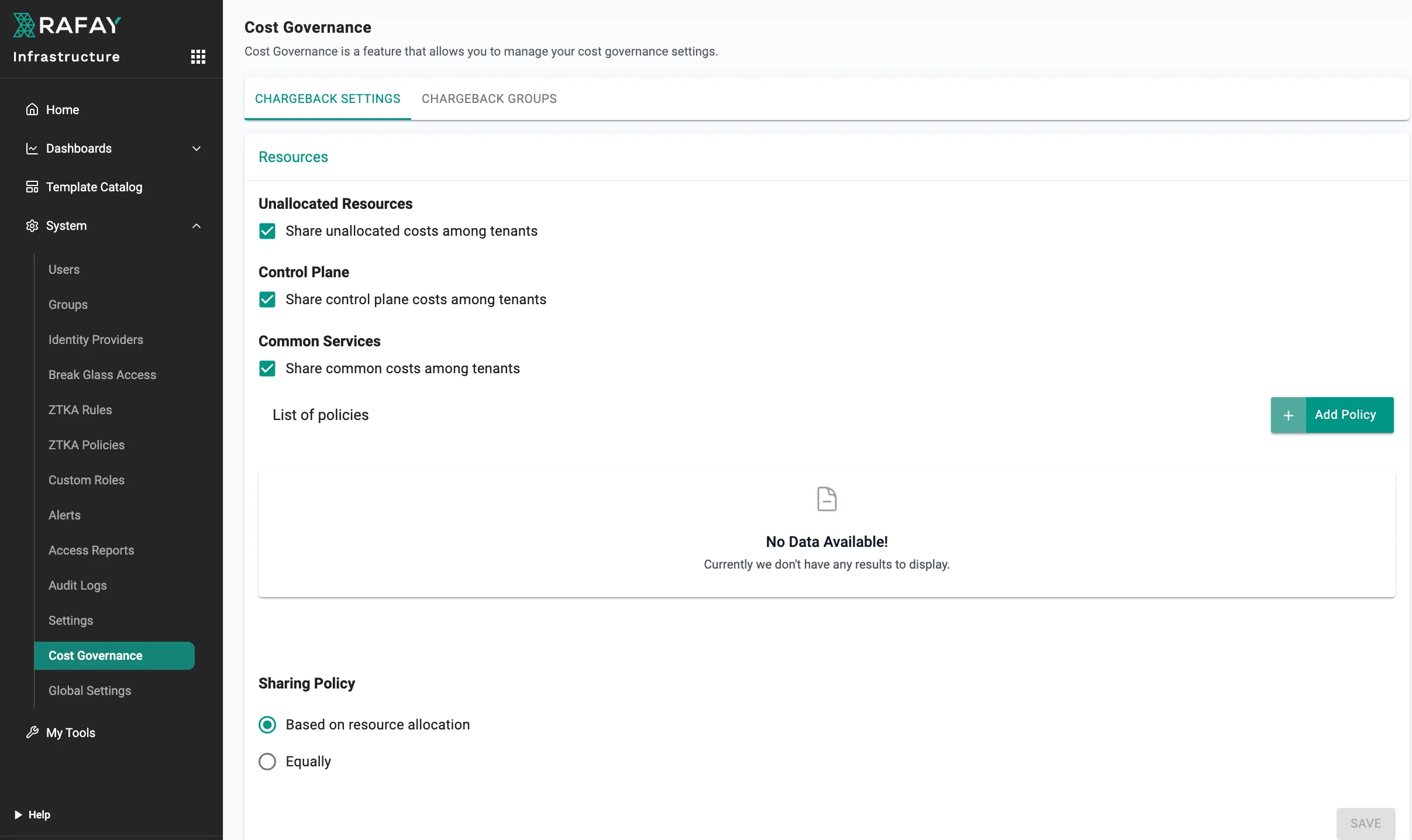
Integrated Governance, Quotas & Audits
Maintain full control with fine-grained RBAC, OPA policy enforcement, multi-tenancy, quotas, and real-time audits. Platform teams gain visibility into who is consuming what, with cost and usage tracking available via dashboards and APIs.
Benefits
Unlock the Future of Compute Consumption
The Rafay Platform elevates infrastructure to become a launchpad for innovation by transforming status compute into enterprise-grade, centrally governed, self-service environments.
- Faster Time-to-Market: Provision environments quickly and consistently so developers can focus on building, not waiting.
- Built-in Compliance: Every resource is automatically aligned with enterprise security policies, ensuring accountability across teams.
- Instant Access to AI Tools: Developers and data scientists get one-click access to curated environments like Jupyter, Ray, and Kubeflow, while platform teams maintain control with policy-driven defaults and audit trails.
- Maximized GPU Utilization: Run multiple workloads on shared infrastructure with GPU slicing (MIG, vGPU), quotas, and auto-scaling, driving efficiency and cost savings.
- Unified Operations Everywhere: Deliver the same self-service workflows across public clouds, private data centers, and sovereign air-gapped environments, all managed through Rafay’s zero-code PaaS Studio and single control plane.

Trusted by leading enterprises, neoclouds and service providers








Questions and answers about self-service compute consumption
Find answers to your most pressing questions about self-service compute consumption.
Self-service compute is a model where developers, data scientists, and platform engineers provision GPU and CPU resources on demand through a portal or API — without filing tickets, waiting for infrastructure team intervention, or navigating manual approval workflows. In the Rafay platform, self-service compute is delivered through the DevHub portal, which presents a governed catalog of pre-approved compute SKUs — bare metal servers, GPU-accelerated VMs, managed Kubernetes clusters, and Slurm partitions — that tenants can deploy in approximately 30 seconds. Each resource request is automatically governed by the tenant's assigned quota, RBAC policies, and organizational chargeback rules, so self-service speed does not come at the cost of governance or cost control. Platform teams define what is available and at what limits; tenants consume within those bounds without requiring hand-holding.
Rafay's self-service compute works through a governed SKU catalog that platform operators define and tenants consume. A platform team uses PaaS Studio to design compute SKUs — specifying instance type, GPU model, storage options, networking configuration, and associated quota limits — and publishes them to the DevHub portal. Tenants browse the catalog, select the compute type they need, and deploy it; provisioning is automated end-to-end through Rafay's workflow engine, typically completing in approximately 30 seconds for cluster-level resources. Every deployment is governed automatically: quota checks prevent over-consumption, RBAC ensures tenants only see resources they are authorized to use, and chargeback data is collected per deployment for cost attribution. The platform team retains full visibility into utilization across all tenants without managing individual requests.
Self-service compute through the Rafay platform delivers four concrete benefits for enterprises and GPU cloud providers. First, it eliminates the infrastructure ticketing bottleneck: developers and data scientists can provision GPU environments in approximately 30 seconds rather than waiting days or weeks for manual provisioning. Second, it improves GPU utilization by reducing the idle time that accumulates when resources sit waiting for manual allocation — quotas and automated reclamation keep more of the fleet active. Third, it enforces governance automatically: every resource deployment is governed by pre-defined quotas, RBAC policies, and chargeback rules without requiring platform team involvement in each transaction. Fourth, it scales the platform team's leverage — a small infrastructure team can support hundreds of active tenants because the catalog model replaces per-request work with one-time SKU design.
Yes, self-service compute platforms incorporate robust security measures. These include access controls, encryption, and compliance with industry standards. Your data and resources are protected throughout the process.
Self-service compute is designed for enterprises and service providers alike. It can benefit teams across various departments, from IT to development. Anyone needing flexible computing resources can leverage this solution.
The Definitive GPU PaaS Reference Architecture
Understand what it takes to deliver the right GPU infrastructure to your business.