As part of our continuous effort to bring the latest Kubernetes versions to our users, support for Kubernetes v1.36 (codename ハル / Haru) is now available on the Rafay Operations Platform for MKS cluster types.
Both new cluster provisioning and in-place upgrades of existing clusters are supported. As with most Kubernetes releases, this version deprecates and removes a number of features. To ensure zero impact to our customers, we have validated every feature in the Rafay Kubernetes Operations Platform on this Kubernetes version.
Recommended: Platform Version 1.3.0
Rafay Platform Version 1.3.0 is the default selection in the UI when provisioning new Kubernetes clusters. It includes containerd 2.3.0 (CRI 2.3.0). Rafay recommends using Platform Version 1.3.0 with Kubernetes v1.36 to take advantage of all new stable features in the 1.36 release. For upgrading existing clusters, you can upgrade to Platform Version 1.3.0 separately first, or together with the Kubernetes v1.36 upgrade.
Platform Version 1.3.0 — Container Runtime Update
Recommended
Rafay recommends Platform Version 1.3.0 with Kubernetes v1.36. It includes CRI 2.3.0 (container 2.3.0) and is the best way to use all new stable features delivered in the Kubernetes 1.36 release
Platform Version 1.3.0 is the default platform version selected in the UI when creating new Kubernetes clusters. It delivers containerd 2.3.0, aligning with upstream Kubernetes support for the updated container runtime on Kubernetes 1.36.
What this means for you:
When creating a new cluster on Kubernetes v1.36, Platform Version 1.3.0 is pre-selected by default in the console.
Rafay recommends staying on Platform Version 1.3.0 with Kubernetes v1.36 so you can use all new stable features in the 1.36 release.
If you are upgrading an existing cluster to Kubernetes v1.36, you can upgrade to Platform Version 1.3.0 separately first, or together with the Kubernetes v1.36 upgrade.
For the full Kubernetes and platform version support matrix, see the Support Matrix.
New Cluster Provisioning
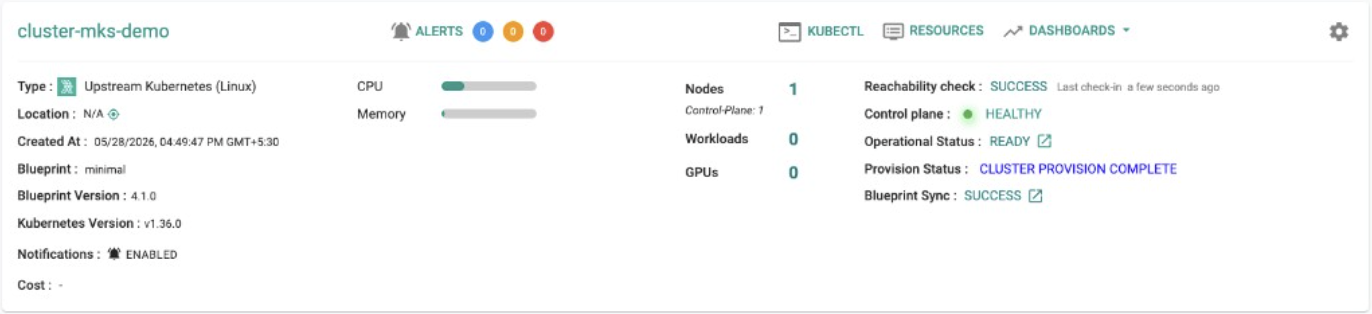
Users of the Rafay platform can provision new clusters based on Kubernetes v1.36 using the supported interfaces. The cluster dashboard confirms the control plane is healthy and running the selected Kubernetes version:
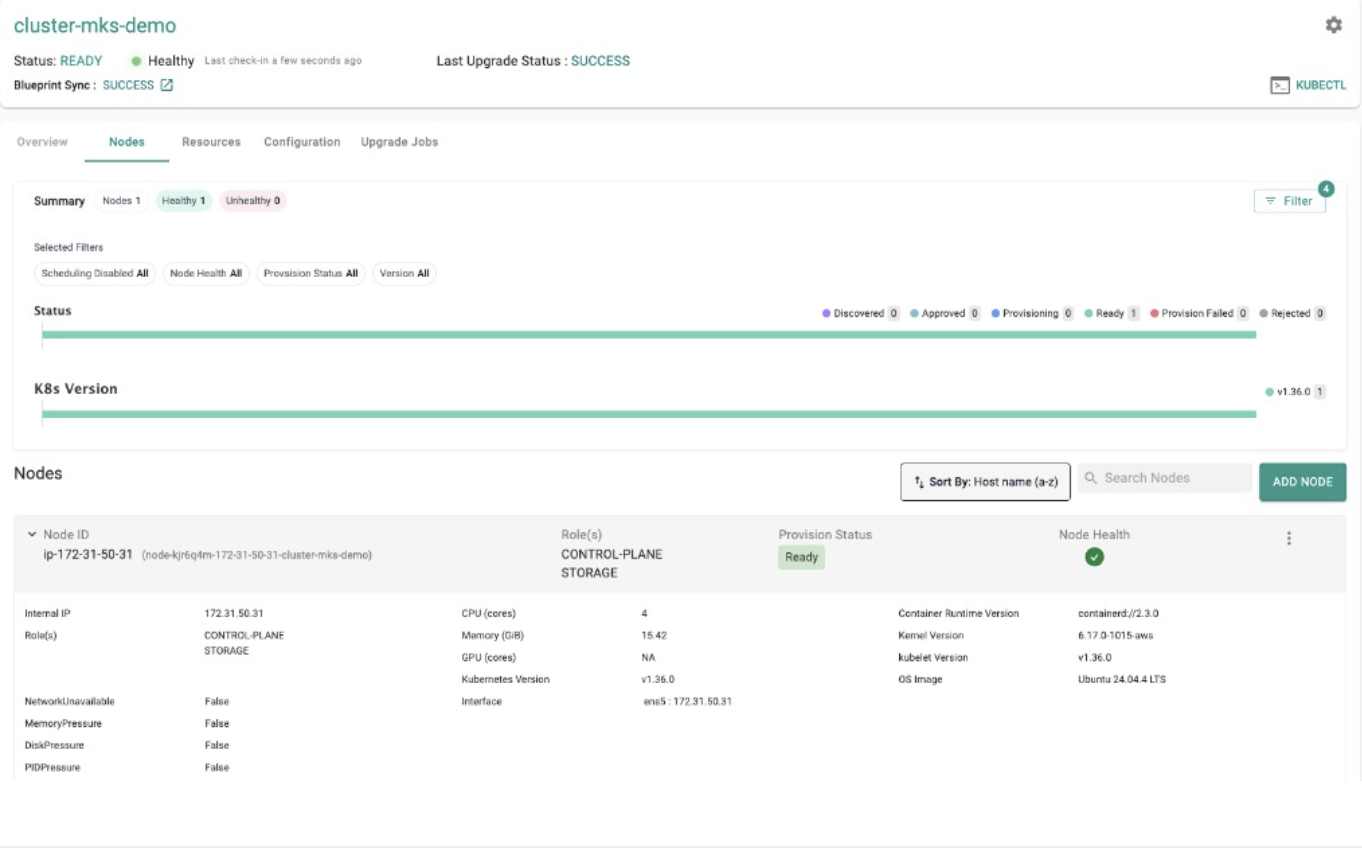
Clicking on a node in the cluster dashboard provides additional details about the Kubernetes version, kubelet, container runtime, and OS image:
In-Place Upgrades
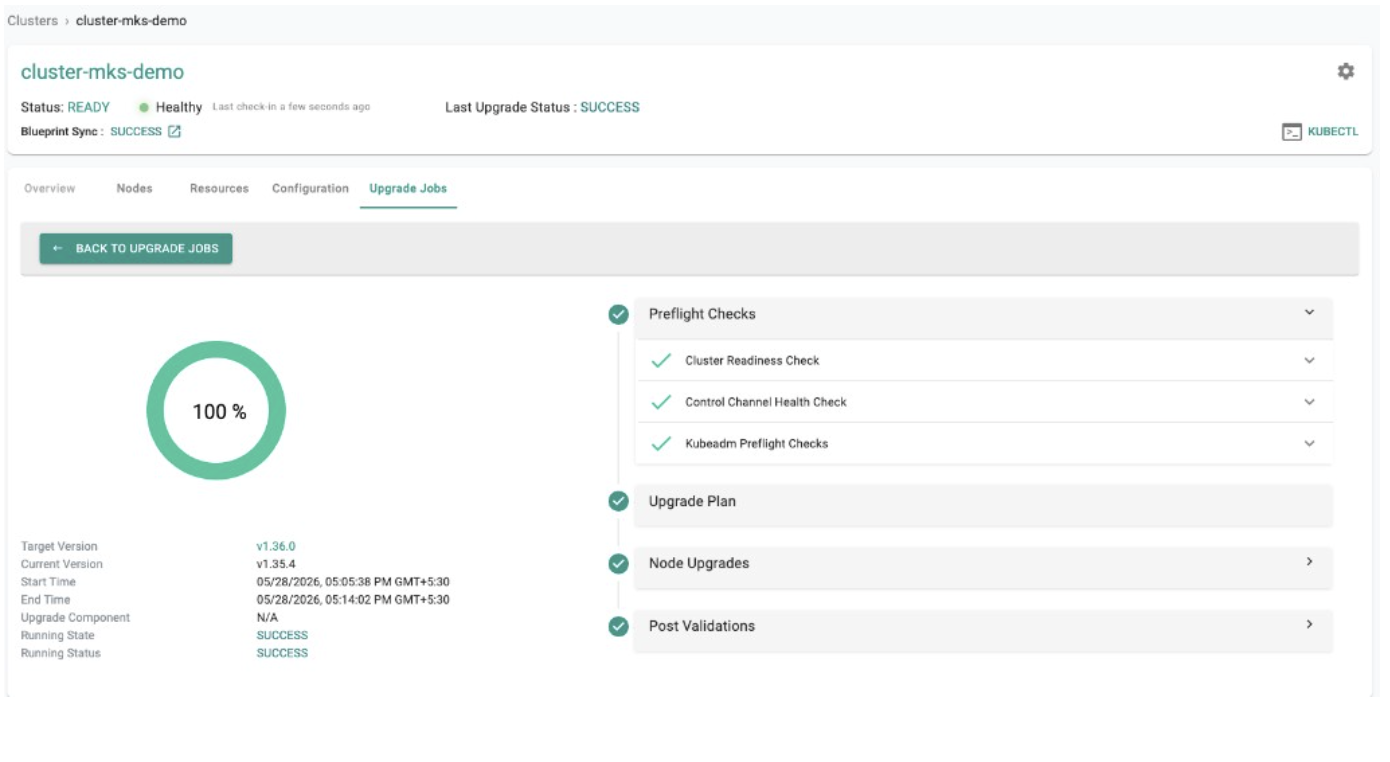
Users with existing Rafay MKS clusters can upgrade to Kubernetes v1.36 in place. All upgrade operations are audited in the centralized audit logs, and users can view upgrade history on the Upgrade Jobs tab. An illustrative example is shown below:
Reminder
Rafay recommends upgrading to Platform Version 1.3.0 when moving to Kubernetes v1.36. You can upgrade the platform separately first, or together with the Kubernetes v1.36 upgrade. Platform Version 1.3.0 includes containerd 2.3.0 and helps ensure you can use all new stable features in the 1.36 release.
CNCF Conformance
Kubernetes v1.36 clusters provisioned and managed by Rafay are CNCF conformant. We have submitted the conformance results for v1.36 to CNCF; the submission passed all requirements and was merged on 27 May 2026. As with every release, this ensures that Rafay's support for Upstream Kubernetes adheres to the required APIs and maintains compatibility with open source community versions.
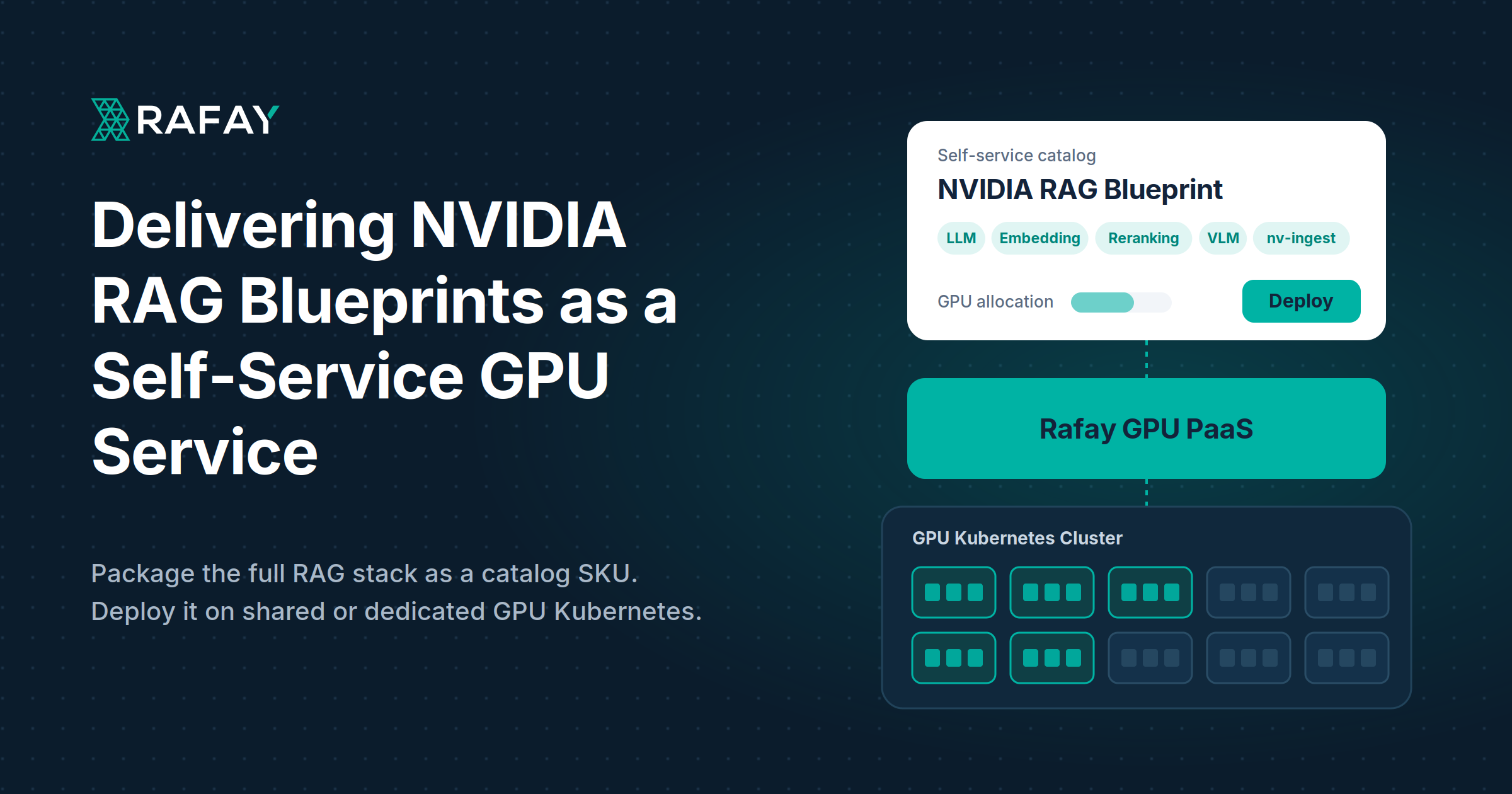
Delivering NVIDIA RAG Blueprints as a Self-Service GPU Service
A production RAG stack spans LLMs, embedding and reranking models, ingestion, and search. See how Rafay GPU PaaS turns the NVIDIA RAG Blueprint into a repeatable, self-service catalog offering for neoclouds.
Certifying Tenant GPU Kubernetes Clusters with NVIDIA Cluster Readiness Engine
Learn how NeoClouds can use NVIDIA Cluster Readiness Engine to certify GPU Kubernetes clusters before tenant handoff and validate AI workload readiness.
.png)