Commercializing Telco Infrastructure
This playbook outlines a practical, phased approach for telecommunications providers to transform existing GPU infrastructure into a revenue-generating AI Factory in as little as 12 weeks.
Telecom operators across the globe are deploying AI infrastructure, and are exploring ways to turn said infrastructure into consumable and differentiated services for their customers. Decades of investment in distributed data centers, edge locations, and fiber, combined with trusted regulatory standing and deep enterprise relationships, put telcos in a strong position to operate sovereign AI clouds.
The Rafay Platform supplies the operating layer that turns that infrastructure into governed, self-service AI services: multi-tenancy, SKU automation, token metering, billing APIs, and a white-labeled portal, to move from GPU capacity to recurring AI revenue in weeks.
A telco AI cloud is a sovereign, revenue-ready AI platform built on the distributed infrastructure telcos already operate. It exposes GPU capacity, packaged compute, AI development environments, and model inference as governed, self-service offerings that enterprises and government customers can consume directly. Rather than renting capacity by the hour, telcos deliver AI as a service and price it by the output their customers consume.
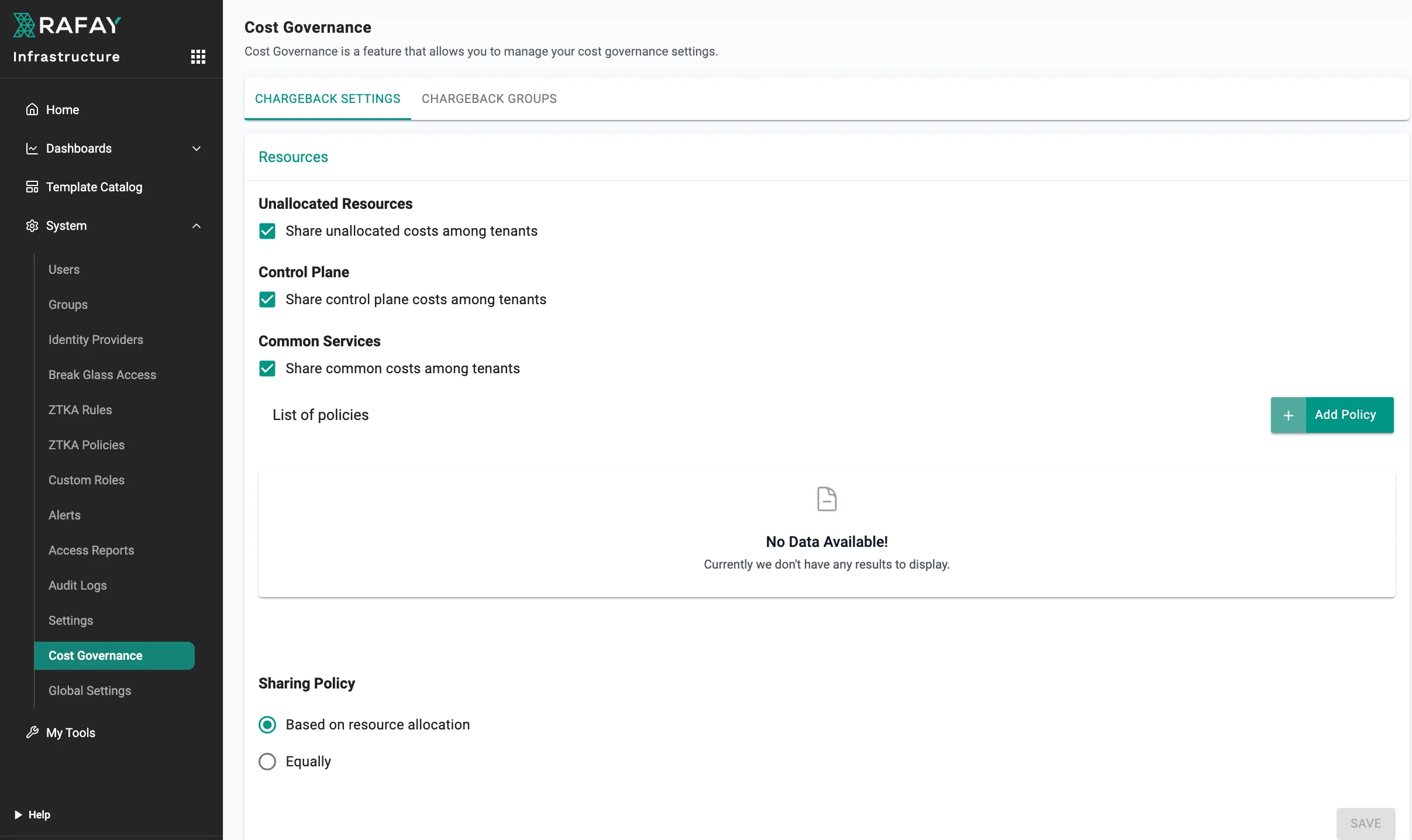
Rafay provides the operating layer that makes this possible, turning distributed GPU infrastructure into secure, multi-tenant services with governance, usage metering, and billing built in.




.png)







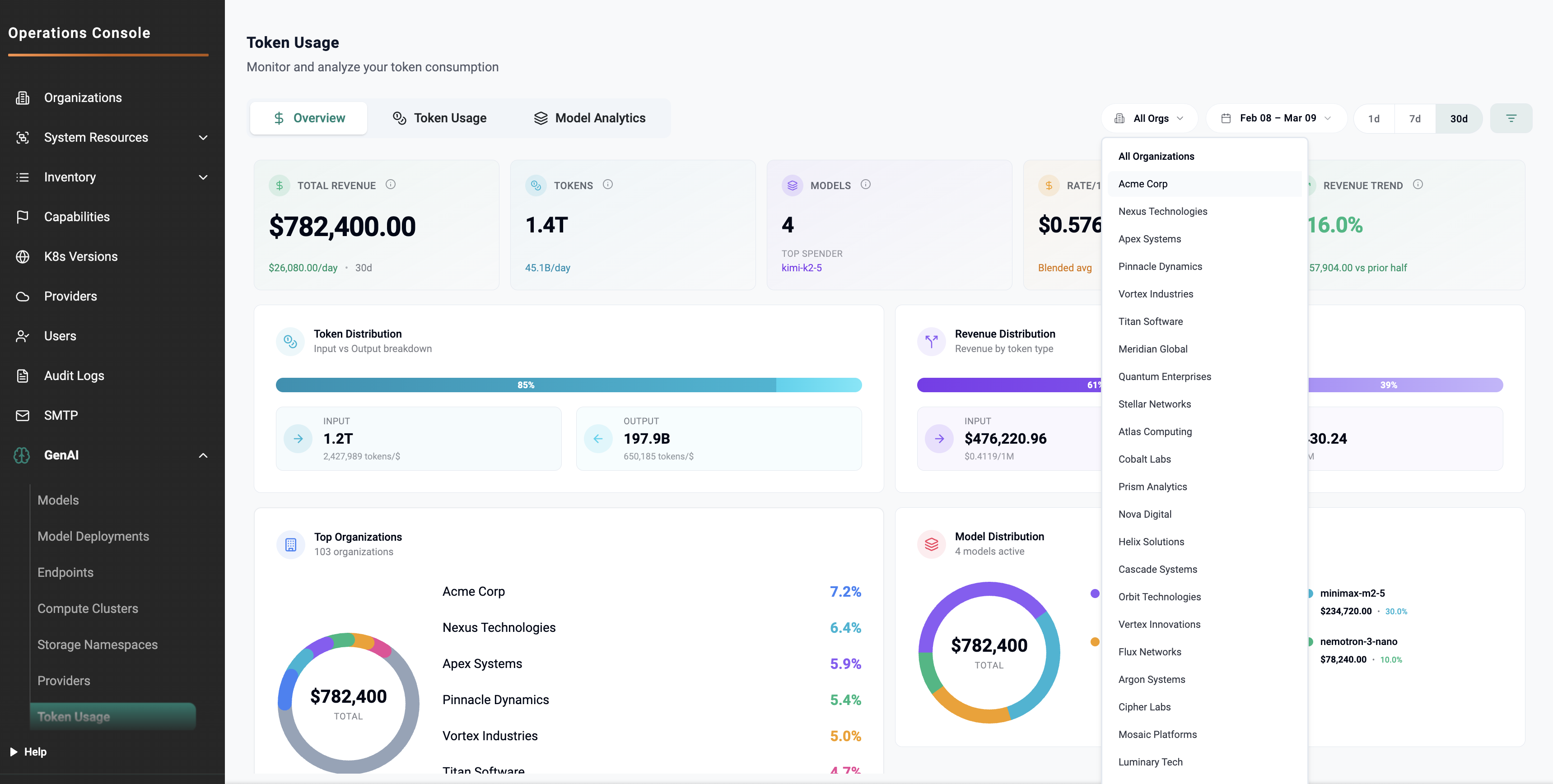
The AI market is shifting from selling GPU hours to selling AI output. Instead of charging for instances and uptime, operators price AI in terms of the inference their customers consume: tokens generated, requests served, and workflows completed, all governed by SLAs for latency and quality.
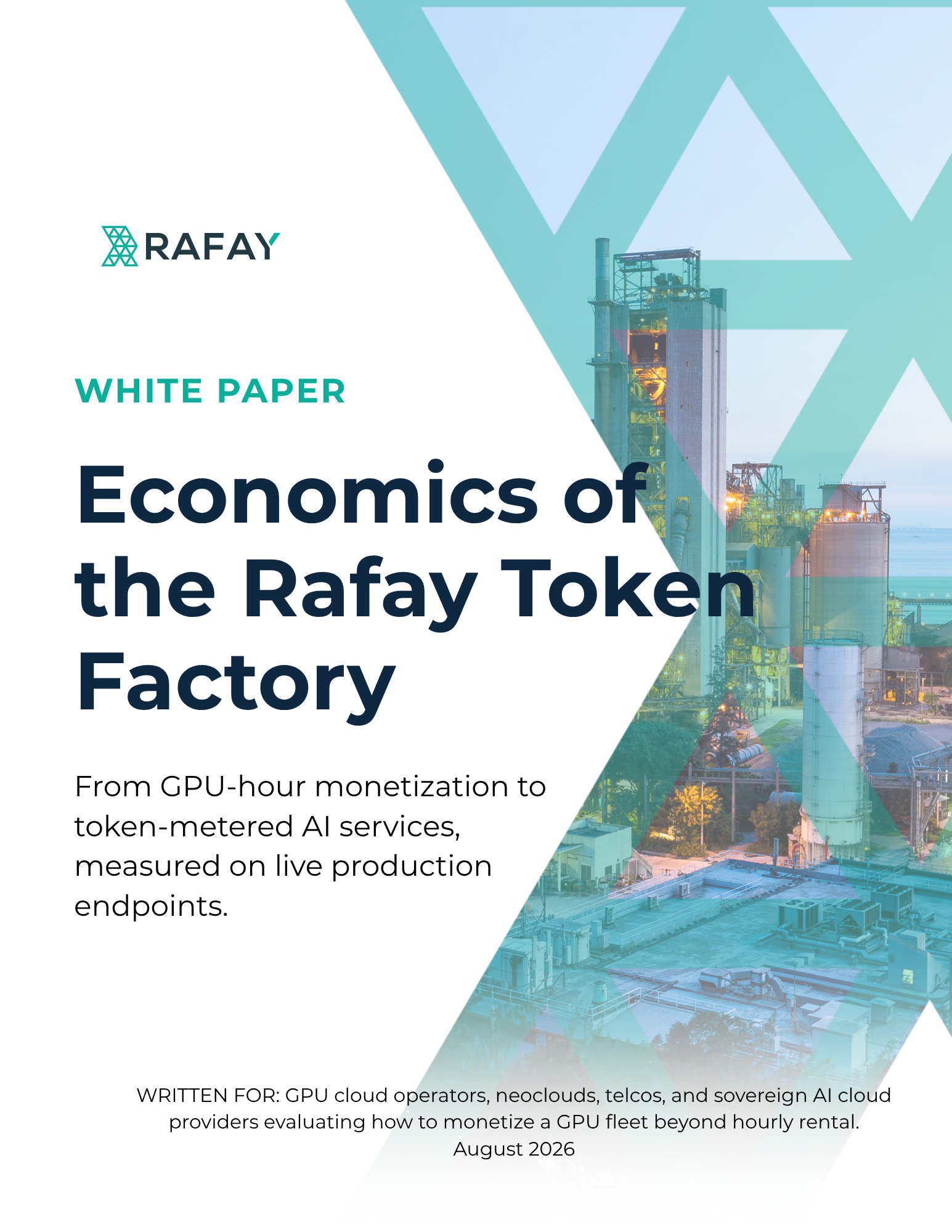
For telcos, this shift is both a revenue opportunity and a design decision. NVIDIA's analysis shows that the same physical GPU can generate several times higher annual revenue when monetized per token rather than per GPU hour, even under conservative utilization and pricing assumptions. Capturing that upside requires a platform that can expose telco capacity as secure, token-metered services. The Rafay Platform is built for exactly that role, and it is in production today.

Move beyond ARPU-based connectivity services to GPU-as-a-Service and, ultimately, to AI platforms delivering inference, training, and enterprise-ready capabilities on the same infrastructure.

Expose distributed data centers, edge sites, and GPU capacity as programmable, elastic services. Package compute and AI into standardized offerings and establish repeatable, high-margin recurring revenue.

Apply identity, access, policy, quota, and audit controls consistently across in-region and air-gapped environments. Serve regulated and mission-critical workloads for government, healthcare, and financial services customers with confidence.

Launch AI services in weeks rather than the many months a from-scratch platform build would require, using Rafay's multi-tenant operating layer, metering engine, and billing integration.
Telcos use Rafay to package and deliver GPU infrastructure, AI environments, and model services to enterprises and government customers as governed, token-metered offerings.
Governments and regulated enterprises consume these services with confidence, knowing workloads run on trusted domestic infrastructure with control over data residency, access, and operations.
One of Canada's largest telecom companies, Telus, launches a sovereign, developer-ready AI Studio powered by Rafay
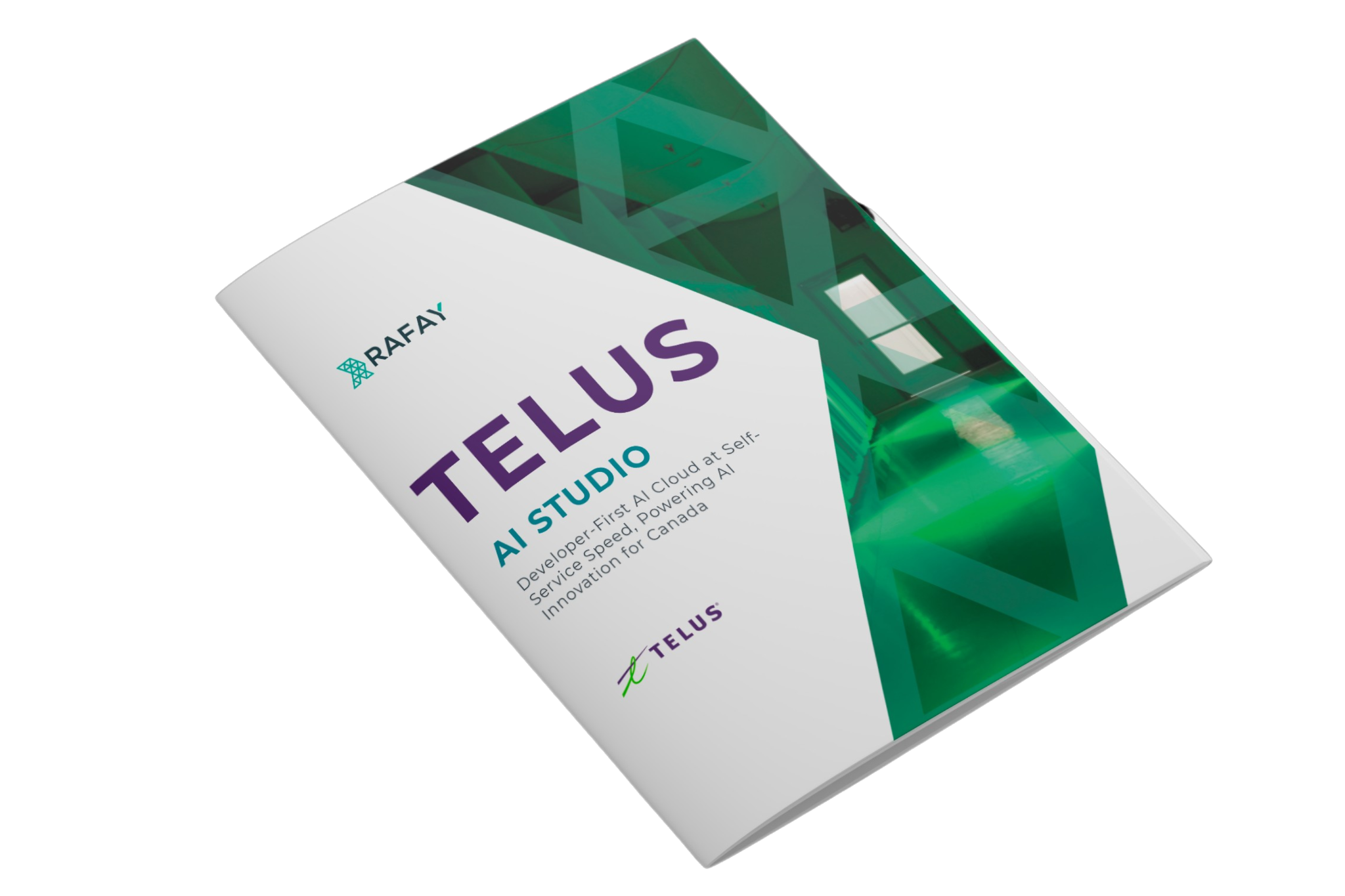
Learn how telcos build, operate, and monetize AI clouds on their own infrastructure with Rafay.
A telco AI cloud is an AI platform that a telecommunications provider builds on its own distributed infrastructure to deliver GPU capacity, compute environments, AI development tools, and model inference as governed, self-service services. It lets telcos move beyond connectivity revenue and monetize AI directly, often within their own national or regulatory borders.
Rafay lets telcos package infrastructure and AI into standardized SKUs and price them through flexible consumption models, including on-demand, subscription, and reserved. Built-in usage metering and token-based billing turn consumption into revenue, and usage data feeds directly into billing and CRM systems. Operators can offer foundation, compute, and AI SKUs on the same fleet, shifting their revenue mix toward higher-margin AI services without re-platforming.
Selling AI output rather than GPU hours matches how enterprises actually consume and budget for AI. NVIDIA's analysis shows the same physical GPU can generate several times higher annual revenue when monetized per token rather than per GPU hour. In a token model, gains in tokens-per-second and cost-per-token from newer platforms show up as more revenue and better margins on the same footprint, rather than pressure to cut hourly prices.
Telcos can typically reach their first billable AI services in weeks using the Rafay Platform, compared to the many months a from-scratch build would require. Rafay provides the multi-tenant operating layer, self-service portal, SKU design tools, metering engine, and billing integration that operators would otherwise assemble themselves. Once running, operators can expand the service catalog without re-platforming.
Yes. The Rafay control plane and platform components can be deployed in private, in-region, restricted, edge, or fully air-gapped environments to meet data residency, security, and regulatory requirements, while keeping distributed capacity under a single control plane.
Yes. The Rafay Platform supports full white-label customization, so telcos can present the self-service portal entirely under their own brand. Logo, colors, domain name, and product name are configurable, delivering a branded, hyperscaler-style experience to end customers without building a portal from scratch.
Rafay enforces hard multi-tenancy so many customers can share one GPU fleet without sharing data, network access, or blast radius. Each tenant operates with its own quotas, role-based access, and policy controls, while operators govern the entire fleet from a single control plane, with performance isolation that prevents noisy-neighbor effects.
Operators can deliver bare metal, virtual machines, Kubernetes clusters, SLURM clusters, AI workspaces, applications, Model-as-a-Service offerings, and token-metered AI APIs through a governed, self-service platform.
Launching a telco AI cloud requires more than deploying GPU infrastructure. Operators need an operating layer that can provision resources, isolate tenants, standardize services, govern consumption, meter usage, and connect it all to commercial systems. Rafay supplies that layer across infrastructure, compute, and AI services, helping telcos monetize the position they already hold without building and maintaining a fragmented cloud platform internally.