The industry is clearly recognizing the need for application lifecycle management capabilities needed by devops teams to extract value from all the amazing capabilities that Kubernetes and its associated ecosystem have to offer.In a recent OpenShift blog describing RedHat’s partnership with Microsoft Azure, RedHat outlines the need for Application Lifecycle Management AND underscores that customers need to solve this problem themselves.But the industry needs to do more.We need to focus on delivering higher order capabilities to companies so that engineers can focus on building their apps, not complex platforms on top of Kubernetes. At Rafay, we are on a mission to make Kubernetes easy to consume by any company, regardless of how far along they are on their journey. The Rafay platform empowers DevOps teams to focus on their business-critical software development instead of building and maintaining complex internal tools.Fulfilling the gap called out by OpenShift (see diagram below from their website) is our strategic mission at Rafay:
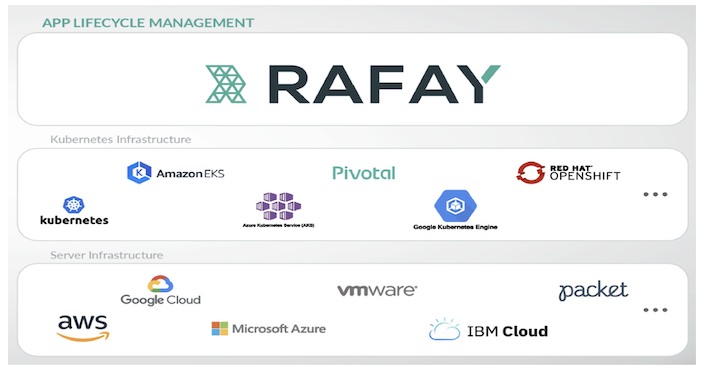
Incidentally, we display the following diagram on our website:
The Rafay platform works with your favorite Kubernetes distribution (OpenShift, AKS, EKS, PKS, GKE, or anything else) and can be seamlessly integrated to deliver SaaS-based lifecycle management capabilities to your company. Net-net, by automating the lifecycle management of containerized apps through a SaaS offering, the Rafay platform automates the repetitive work devops teams carry out to keep Kubernetes environments up and running for their internal customers. Our existing users love the product and continue to help us make it better. If you’d like to look at a demo to see how the Rafay platform can assist your DevOps teams,Want to see a demo of the Rafay platform in action? Please feel free to get in touch or email me directly.
Rafay Enhances Kubernetes Operations Platform with Enterprise-Grade Security, Standardization and Automation Capabilities
Over the past several years we’ve experienced a tremendous amount of change in the Kubernetes management and container orchestration market. Years ago, Kubernetes was used to support a relatively small number of clusters in lab environments, handling mostly corner use cases, and seen as a simple cluster management tool that was used by DevOps and IT Ops.
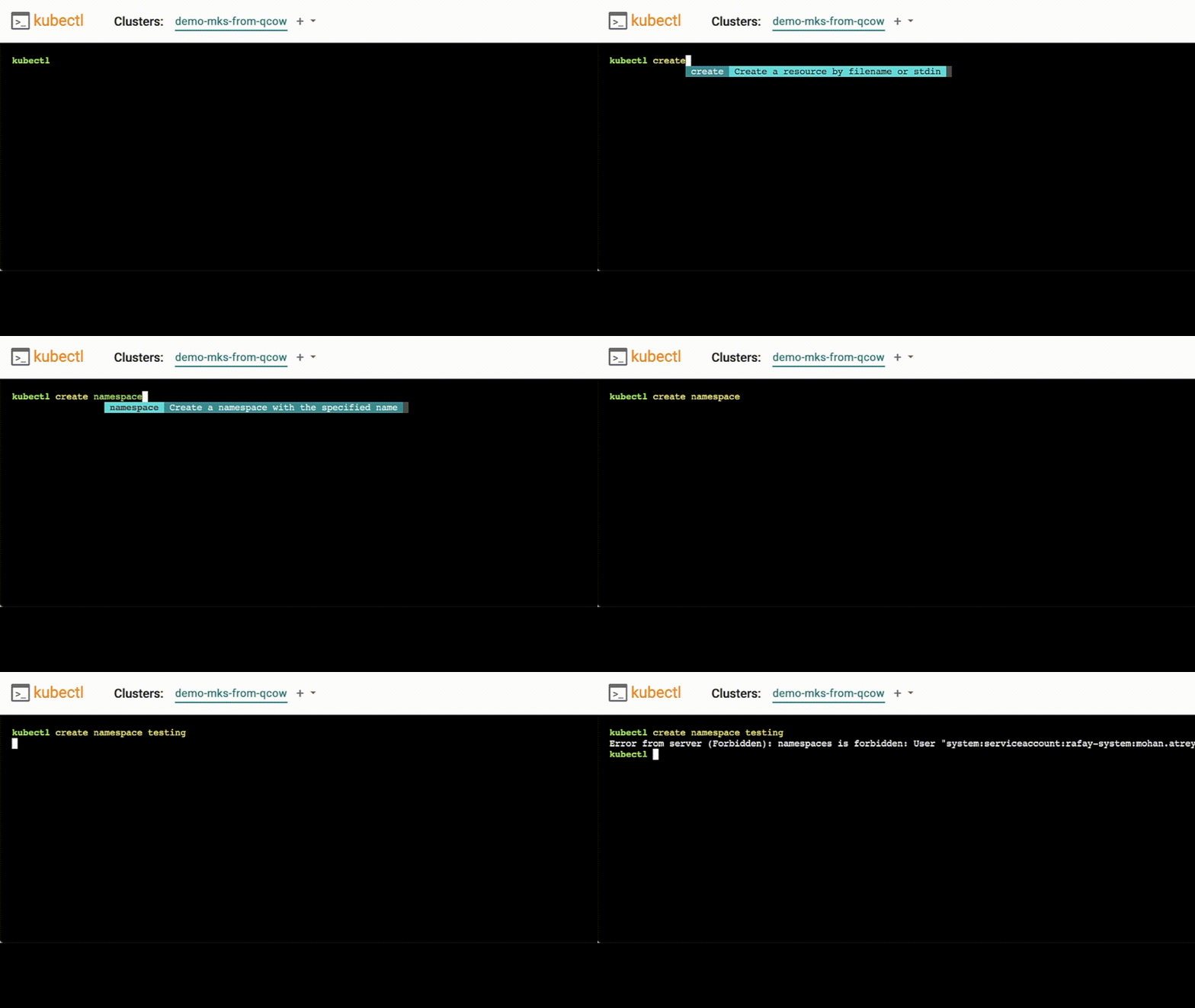
Rafay Product Bytes: Zero-Trust Security for Kubectl, Deeper Amazon EKS Integration, Enhanced Fleet Management and More!
Welcome to our new, ongoing blog series called Product Bytes that highlights recent product enhancements we’ve made to our Kubernetes Management Cloud (for enterprises) and Kubernetes Management Cloud for MSPs (for service providers) products so you can stay up to date on what’s new. In this, our first installment, we’ll introduce a number of key improvements, but stay tuned because we’ll follow up with detailed blog posts on the features worth taking a deeper dive.
"We can build this In-house" is the new Mythical Man Month
The best part of my job is talking to really smart DevOps and Ops/SRE engineers who understand Kubernetes and the surrounding ecosystem well. They understand that running Kubernetes in any meaningful way requires a significant investment in the right people, the right tools, and time.