What Is Programmable Edge? Operating Distributed AI and Cloud-Native Infrastructure
Read Now
No items found.
2026-08-31

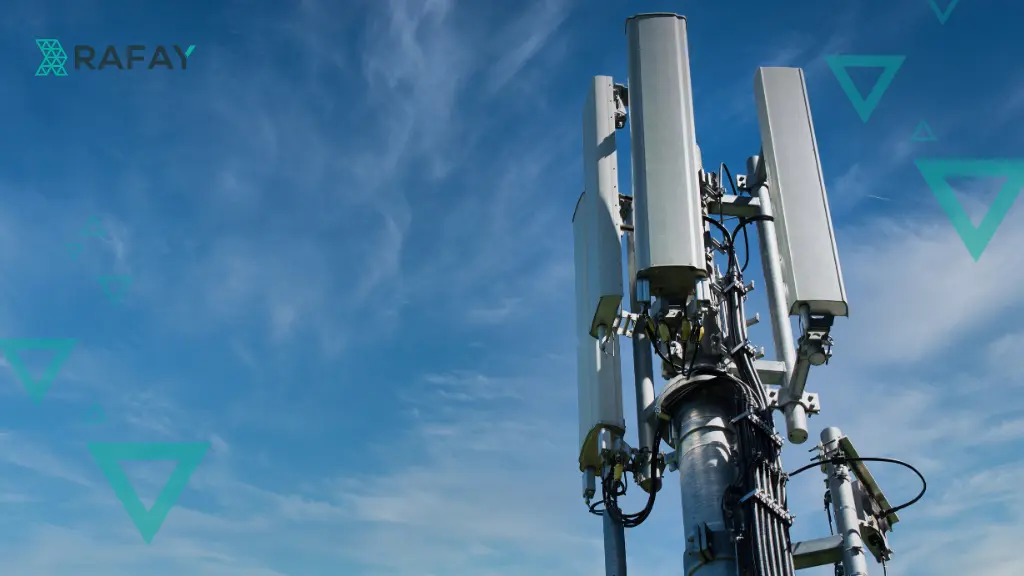
According to the IDC Telco Forum, held in Barcelona on March 2, 2025, telecom companies are “shifting from being traditional connectivity providers to being full-stack technology suppliers that require structural changes to sustain profitability.”
That means telecom companies must now move beyond connectivity and towards technology platforms that enable new revenue streams. To that end, Telco cloud services provide the foundation for delivering AI, GPU-as-a-Service, and other digital services at scale.
A telco cloud is a cloud-native infrastructure and operating model. It enables communication service providers (CSPs) to virtualize and containerize their network functions. This allows them to optimize their cloud infrastructure and deliver new digital services.
Instead of relying on proprietary hardware, this model uses technologies such as containers and microservices, combined with DevOps practices and continuous integration/continuous deployment (CI/CD) delivered through cloud infrastructure.
Reduced dependence on proprietary hardware components means greater flexibility, scalability, and automation. Businesses can lower their costs, offer more agile, reliable services, and lay the foundation for AI and other digital services.
Together, these capabilities enable:
Initially, telecom service providers relied on specialized hardware. Components such as routers and load balancers handled network functions. Each component had its own purpose. This specialization made the model extremely effective, but simultaneously inflexible. Because equipment was costly, changing direction was neither quick nor inexpensive.
With the move to the cloud, network function virtualization (NFV) allowed functions to be implemented virtually through software. Deployments were more flexible and less dependent on hardware.
However, as a “lift and shift” migration, it wasn’t designed to make the most of the cloud environment. NFV was cheaper than using proprietary hardware, but still quite difficult to maintain for a single-purpose function. It also had some of the same limitations as using dedicated components.
Eventually, instead of running entire applications inside virtual machines, cloud-native architectures began packaging individual services into lightweight containers. Every application was further split into microservices, with each one responsible for one specific task.
Automation, APIs, and CI/CD practices reduced manual operations while enabling faster and more consistent updates.
This microservice architecture made scaling much easier. Network functions could be updated individually rather than as part of a larger application. Workloads could be distributed across private cloud, public cloud, or hybrid cloud environments based on performance, cost, and compliance requirements.
At the same time, CSPs began virtualizing and containerizing radio network functions to create Radio Access Networks (RANs). This laid the foundation for modern telco cloud architectures and enabled more flexible deployment models.
It also laid the foundation for edge computing, where applications and AI workloads can be processed closer to users to reduce latency and improve performance.
These cloud-native network functions (CNFs) made telco clouds significantly more agile, scalable, and efficient. They transformed telco clouds from platforms that primarily ran network services into platforms capable of delivering AI, GPU cloud, edge, and other digital services, creating new commercial opportunities.
So, how are telco cloud services different from traditional telco networks?
Rather than simply transporting data, telco clouds allow operators to use the same infrastructure to transport, process, host, and deliver a much broader range of services. The following characteristics distinguish telco clouds from both legacy telecom networks and enterprise cloud environments.
The modern telco cloud architecture is built around virtualized and cloud-native technologies. These allow resources to be provisioned and updated dynamically. Each microservice can be scaled independently of the others, making it easier to scale specific parts of the infrastructure.
This agile approach enables operators to respond faster to changing demand. They can introduce new digital services more quickly and make better use of existing infrastructure without major hardware investments.
In the past, network functions were tied to dedicated hardware in fixed locations. Telco clouds, on the other hand, can distribute applications across private data centers, public clouds, and edge locations.
Processing workloads closer to users reduces latency and improves performance for applications such as AI inference, IoT platforms, and real-time analytics. This allows operators to balance performance, cost, and compliance requirements while delivering AI and latency-sensitive applications where they are needed most.
Legacy telecom networks were built around dedicated hardware designed to deliver carrier-grade reliability. Cloud-native architectures maintain those same standards. However, they also improve operational flexibility through distributed workloads, automation, and intelligent workload management.
By automatically redistributing workloads and recovering from failures, operators can maintain predictable performance and service continuity. At the same time, they simplify maintenance and make more efficient use of shared infrastructure.
The characteristics of a telco AI cloud extend far beyond operational efficiency. They also help communication service providers create new revenue opportunities, deliver better customer experiences, and build the foundation for AI-powered services.
Telcos already have geographically distributed infrastructure. Telco cloud technologies allow them to abstract that into a programmable platform. This enables AI services, GPU-as-a-Service, enterprise platforms, and other digital offerings that customers can consume on demand.
By moving beyond connectivity revenue, operators can create entirely new revenue streams from those digital services.
While the telco cloud computing infrastructure enables new business opportunities, those new services must be developed and deployed. Additionally, in an increasingly competitive market, rapid execution is critical.
Fortunately, cloud-native architecture consists of independent microservices, automation, and DevOps practices. This enables operators to respond to changing market demand faster while bringing new commercial services to customers more quickly.
Traditional telecom networks relied on dedicated hardware designed for specific functions. While effective, this approach often resulted in underutilized resources and expensive upgrade cycles as demand changed.
Virtualized and containerized environments reduce the reliance on proprietary hardware while allowing infrastructure to be shared across multiple workloads. This improves resource utilization, reduces capital expenditure (CapEx), and lowers operational expenditure (OpEx). Lower operating costs also free investment for AI infrastructure, digital services, and future platform expansion.
Modern telecommunications services are expected to be always available, highly responsive, and capable of supporting increasingly data-intensive applications.
Telco clouds distribute workloads across private data centers, public clouds, and edge locations. They process applications closer to users, reducing latency and improving responsiveness. This streamlines data flow while helping operators balance workloads across distributed environments.
Cloud-native scalability, high availability, and AI-driven analytics enable operators to deliver more than just reliable services. They can adapt to changing demand more quickly and create richer digital experiences for both enterprise and consumer customers.
Artificial intelligence and IoT devices continue to generate larger volumes of data. As such, CSPs need infrastructure that scales without requiring dedicated hardware for each new workload.
Cloud-native infrastructure enables AI workloads to be distributed and scaled across private and public clouds, as well as edge locations. At the same time, automation simplifies deployment and lifecycle management. Combined with edge computing, this reduces latency for time-sensitive applications.
It also allows operators to introduce AI services, GPU cloud offerings, and IoT platforms more quickly while maintaining the performance and responsiveness those workloads require.
Building a telco AI cloud is only part of the transformation. To turn cloud infrastructure into commercial AI and digital services, CSPs also need a platform that simplifies operations, enables self-service consumption, and supports growth at scale.
So, what should this platform offer?
As infrastructure becomes more distributed, manual provisioning and management quickly become operational bottlenecks. Operators must manage large-scale environments consistently while reducing administrative overhead.
They need a modern telco cloud platform that automates deployment, lifecycle management, and policy enforcement. Automation also enables new services to be delivered consistently across distributed environments without increasing operational complexity.
New digital services often need to be delivered from the same underlying infrastructure to multiple enterprise customers, internal teams, or partners. Each of them must be isolated from the others, and may potentially have different governance and compliance requirements.
To accommodate this, the platform should ideally offer built-in multi-tenancy, role-based access controls, and centralized governance. These features ensure resources remain isolated, secure, and compliant while enabling efficient resource sharing.
Owning GPU infrastructure is only the first step. To deliver AI services commercially, CSPs also need self-service provisioning, governance, usage visibility, and consistent user experiences across environments.
A telco cloud platform should enable packaging services that customers can provision on demand and consume through a self-service experience.
Telecommunications networks continue to evolve alongside AI, edge computing, and other emerging use cases. Platforms should be able to support new workloads without requiring major architectural changes or extensive manual intervention.
This enables CSPs to expand AI and digital service portfolios without repeatedly redesigning the underlying infrastructure.
Owning GPU infrastructure does not automatically make a CSP an AI cloud provider.
Consider a telecom operator investing in AI infrastructure. After purchasing GPU servers, networking equipment, storage, and data center capacity, the physical infrastructure is in place. However, enterprise customers still need a simple way to consume those resources.
The real challenge isn't deploying GPU infrastructure. It's turning that infrastructure into services that enterprise customers can discover, provision, consume, and pay for without manual intervention.
Without a dedicated platform, every new customer typically requires manual provisioning, engineering effort, Kubernetes expertise, governance, and custom billing. While the infrastructure exists, delivering it as a repeatable commercial service quickly becomes difficult to scale.
Rafay's cloud-native platform bridges that gap by transforming AI infrastructure into governed, self-service services that can be consumed on demand.
It offers features such as built-in governance, multi-tenancy, usage metering, chargeback, and policy controls. These allow operators to expose AI infrastructure as commercial services rather than simply shared resources.
Instead of submitting support requests or waiting for manual provisioning, customers can access a self-service developer portal and launch the services they need on demand. It can be a GPU instance, an AI workspace, an inference API, or a Jupyter notebook environment.
The underlying infrastructure remains the same, but the operating model changes. AI infrastructure becomes a governed, self-service platform that supports usage-based consumption, simplifies operations, and enables new revenue streams. That's how communication service providers can monetize AI infrastructure much the same way today's hyperscale cloud providers do.
Read Now

Rafay CEO Haseeb Budhani joins theCUBE to discuss sovereign AI, multi-tenant cloud platforms, GPU monetization, and the shift from infrastructure to AI services.
Read Now

Learn how telcos and NeoClouds can turn sovereign AI infrastructure into token-metered services with Rafay, enabling inference APIs, billing, governance, and monetization.
Read Now